
Search and Compare Affordable Domestic and International Flights from Myanmar

Best Cities to Visit in 2026
Easily book your dream journey with our top flight aggregation service




















Welcome to TICKETS!
Find a complete travel comparison platform at TICKETS. Easily compare flights, prices, and options from multiple providers in one place and choose for your perfect journey.
About TICKETSFind Affordable Flights from Your Location
Automatically determines the most affordable flights from your location based on popular countries

Yangon
Nov 2026
1+ Stops
One Way
Chicago O'Hare International
Nov 2026
From
K1.1M
Yangon
Nov 2026
1+ Stops
One Way
San Francisco International
Nov 2026
From
K1.1MYangon
Nov 2026
1+ Stops
One Way
Minneapolis St Paul
Nov 2026
From
K1.8MExplore Top Journeys: Best Flights by Continent
Information and cheapest flight prices for travel between continents and countries


Cheap Flights to Our Favorite Cities
Our unbeatable flight special deals make your dream journeys more affordable than ever


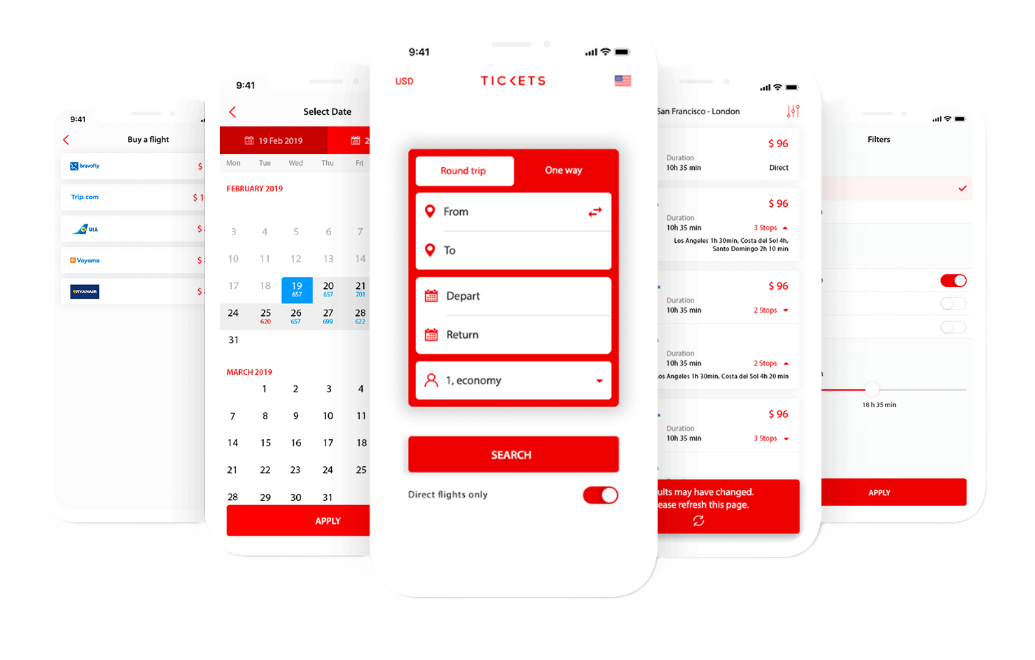
Our TICKETS iOS app scans thousands of flight offers from hundreds of airlines and service providers, delivering the best travel deals from around the world directly to your fingertips.
When to Buy the Cheapest Flights from Myanmar — a Plain Guide to the Right Time, Route, and How Much You'll Save
How far ahead should you book to get a cheap flight?
For short- and medium-haul routes, the sweet spot is booking one to two months before departure, with around six weeks usually best. On nearby routes from Yangon — to Bangkok, Singapore, or Kuala Lumpur — buying far too early can actually cost more, so the old line "book as early as you possibly can" simply isn't true for these trips. For distant international routes it's a different story: you'll want to book months ahead, and even earlier for popular routes in peak travel season. A single ticket's price shifts again and again before departure, so chasing one perfect day is a waste — it's better to set a price alert and let the TICKETS app push you a notification when the price drops. The one rule that always holds: don't wait into the final two weeks, when prices climb fastest.
When is the cheapest time to buy a ticket, really?
Leaving Yangon, the day seats first go on sale ranks among the most expensive moments to buy, with the genuine low arriving later in the cycle. Prices tend to sit high in the earliest window, drift down toward roughly six weeks out, then climb again as the plane fills up. Both extremes — buying very early and buying at the last minute — cost you money, and the value lives in the middle. The exception: on distant routes and in peak season, seats really do sell out, so booking months ahead protects both the price and your seat. For short, off-season trips there's no rush; for long, busy-season trips, lock it in early. Rather than guessing where your route sits, use TICKETS.COM.MM's buy-now-or-wait assessment — it measures about a year of price history and tells you whether to buy now or wait.
Which day is actually cheapest to fly — and is it worth it?
For a cheaper departure from Yangon, the day of the week genuinely matters: leave on a Tuesday or Wednesday and skip Sunday, the priciest day to fly out. The best day shifts with the route and the season, so instead of hunting for one magic date, treat "mid-week, not Sunday" as your rule. On cheap short hops the saving is small, but on long routes like Yangon–Dubai or Yangon–Seoul, avoiding Saturday and Sunday can save a genuinely noticeable amount per person. Keep this clear: this is about the day you fly, not the day you buy — and because prices change continuously rather than on a weekly cycle, the worn-out advice to "buy on Tuesday" is dead. To find the cheap stretches across the calendar, the month price view points you to the low-priced months, and the mid-week rule handles the day.
Why is a split round trip sometimes cheaper than a single airline's fare?
Because an outbound on one airline paired with a return on a different airline can undercut a single carrier's advertised round-trip price. On every round-trip search, TICKETS.COM.MM prices the outbound and the return separately and pairs the cheapest outbound leg with the cheapest return leg into a "combination" result. It only shows that combination when it's genuinely cheaper than the normal round trip, and it shows you how much you save; if the normal round trip ties or wins, that's what it shows instead. Note this: a combination is two separate tickets with two separate confirmations, so you'll open both booking pages before you've paid for either. So you know what you're booking, TICKETS.COM.MM flags the combination, and the math only works out when the gap is real.
Should you buy two one-way tickets instead of a round trip?
Flying out of Yangon, you'll sometimes find that two one-way tickets land cheaper than one round trip — and you don't have to hunt for it yourself, because every round-trip search on TICKETS.COM.MM checks this for you already. When the cheapest outbound and the cheapest return are on different airlines, combining two one-ways can come in lower than a single round-trip fare in kyat. TICKETS.COM.MM pairs them into a combination result, shows it only when it beats the best normal round trip, and tells you how much you save. The trade-off is logistical — a combination is two separate tickets on two different airlines. You confirm each leg separately, and at the connection you collect your bag and re-check it rather than checking it straight through. For a carry-on and a simple round trip, that's no problem; but if the connection is tight or you have a checked bag, weigh the saving against the hassle.
If you can shift your dates, how much is that flexibility really worth?
More than almost any other trick — because flexibility lets savings stack instead of leaning on a single move. Shift from Saturday–Sunday to mid-week and swap into a quieter, cheaper month, and the two together genuinely cut a peak-period price. Shoulder season is the single biggest factor on its own — the quiet stretches between peak holidays are usually far lower than summer peak or the late-December rush. Which months are cheapest shifts with the route, the region, and the hemisphere, but "avoid the obvious peaks" holds nearly everywhere. By comparison, picking the best day of the week saves only a little on a cheap route. That's exactly why looking across a whole month beats checking single days — on TICKETS.COM.MM, the date picker shows the cheapest indicative fare per month across many months, so the low-priced months jump out at a glance.
Is flying from a different airport worth it to save money?
There's real money to be saved by leaving from a different airport, occasionally a lot, since budget airlines settle at cheaper secondary fields where lower fees show up directly in the kyat ticket price. The thing to watch is the door-to-door cost. A cheap fare from a far-off airport only wins once you factor in parking, ground transport, and the longer trip to get there. TICKETS.COM.MM detects your nearest airport, and you can set your home airport yourself too. There's no automatic radius search that bundles nearby airports into one query, so to try a secondary airport, set it as your departure point and compare. To scan prices from your region to many destinations fast, the destination map is the quicker route. The key point: compare the total trip cost, not just the headline ticket price.
Is a cheap self-transfer route worth the risk of a missed connection?
From Yangon, a self-transfer (virtual interlining) fare looks like a bargain until you notice you are the one standing in for the missing insurance. It links two separate tickets on unconnected airlines into one journey, with no agreement between the airlines to protect the connection. The real risk is the connection. If your first leg runs late and you miss the second, that airline owes you nothing — you're a no-show and may have to buy a new ticket. Between legs you collect and re-check your own bag, and any compensation is decided per ticket. So don't just look at the headline fare — count the downside: leave a generous connection, a couple of hours with a carry-on, longer if you have a checked bag or change airports, and consider missed-connection insurance. TICKETS.COM.MM shows these options with a warning, and the route map flags every airport change so you can decide with your eyes open.
Is it worth setting price alerts, or are they just noise?
Lean on an alert to react to a Yangon–Bangkok fare, never to forecast one. A ticket's price changes again and again before departure, so a price alert from the TICKETS app watches a route and pings you the moment it actually drops — turning timing from a guessing game into a rule. Set it, then buy during the cheap window or when it genuinely falls. Alerts help most when your dates are flexible, when you're buying well ahead, or when you're tracking a long route with the most movement. The downside: a fare that pops up suddenly can vanish before the alert fires. If you want a direction of travel rather than a single alert, the buy-now-or-wait assessment scores about a year of price history as buy, wait, or neutral. Alerts in the TICKETS app are free.
Will this fare drop, or should you just buy now?
Wondering if a Yangon–Bangkok fare can still fall? The answer lives in that route's own 12-month history, and TICKETS.COM.MM's buy-now-or-wait tool was built to weigh today's price against it. Add a route and it returns one of three calls — buy now, wait, or neutral — along with a confidence level, the cheapest and most expensive months, and whether the price is trending up, down, or holding steady. The data-backed rule: buy during the cheap window (about six weeks out for short routes, months ahead for long ones) when the fare is at or below that route's normal level. Early in the cycle, when prices are high for the season, waiting can pay off. The strongest signal is the simplest — don't wait into the final two weeks, when prices climb fastest. Still unsure? Set a price alert and let the price moves decide for you.
If it's free with no markup, how does TICKETS.COM.MM make money?
From a referral commission paid by the seller, and only once you complete your booking — we take nothing from you. The price you see is the airline's or travel agency's own price, passed straight through with no markup. When you tap to book, TICKETS.COM.MM hands you off to that provider's own website to pay, and they pay a commission for the referral. That commission doesn't touch the price you see or pay, so comparing flights, the month price view, the destination map, and the buy-now-or-wait assessment are all free — including route price alerts in the TICKETS app. We only earn when a booking completes, and there's no membership fee, no booking fee, and no surcharge added on top of the price.
What's the cheapest time of year to buy a ticket?
Fly in the quieter shoulder seasons between peak holidays — that one choice beats any day-of-the-week trick. In most markets the lowest fares land in January and February (after the winter holidays) and in September and October (once the summer crowds thin out). The expensive stretches are summer peak (roughly June to August) and the late-December holidays. This shifts with the route, the region, and the hemisphere — a Southern Hemisphere summer or a local festival can flip it — but "avoid the obvious holidays and the summer peak" holds nearly everywhere. On TICKETS.COM.MM you can view price data showing the cheapest and most expensive months across a 12-month span for your destinations, so the cheap stretches are easy to spot, then search flights and see the live, bookable fares on the results page.